GROUND-PENETRATING RADAR SURVEY
2026
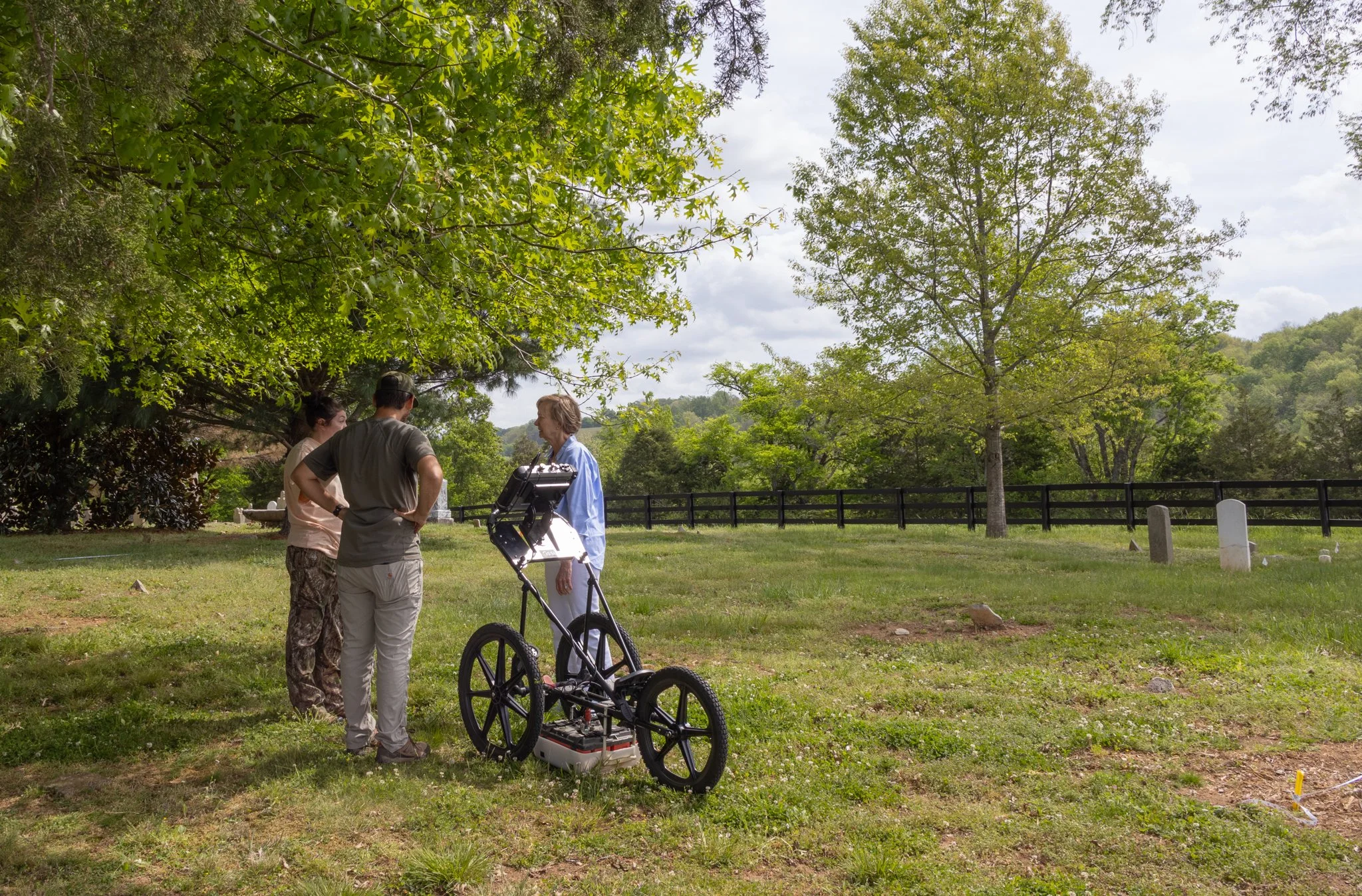
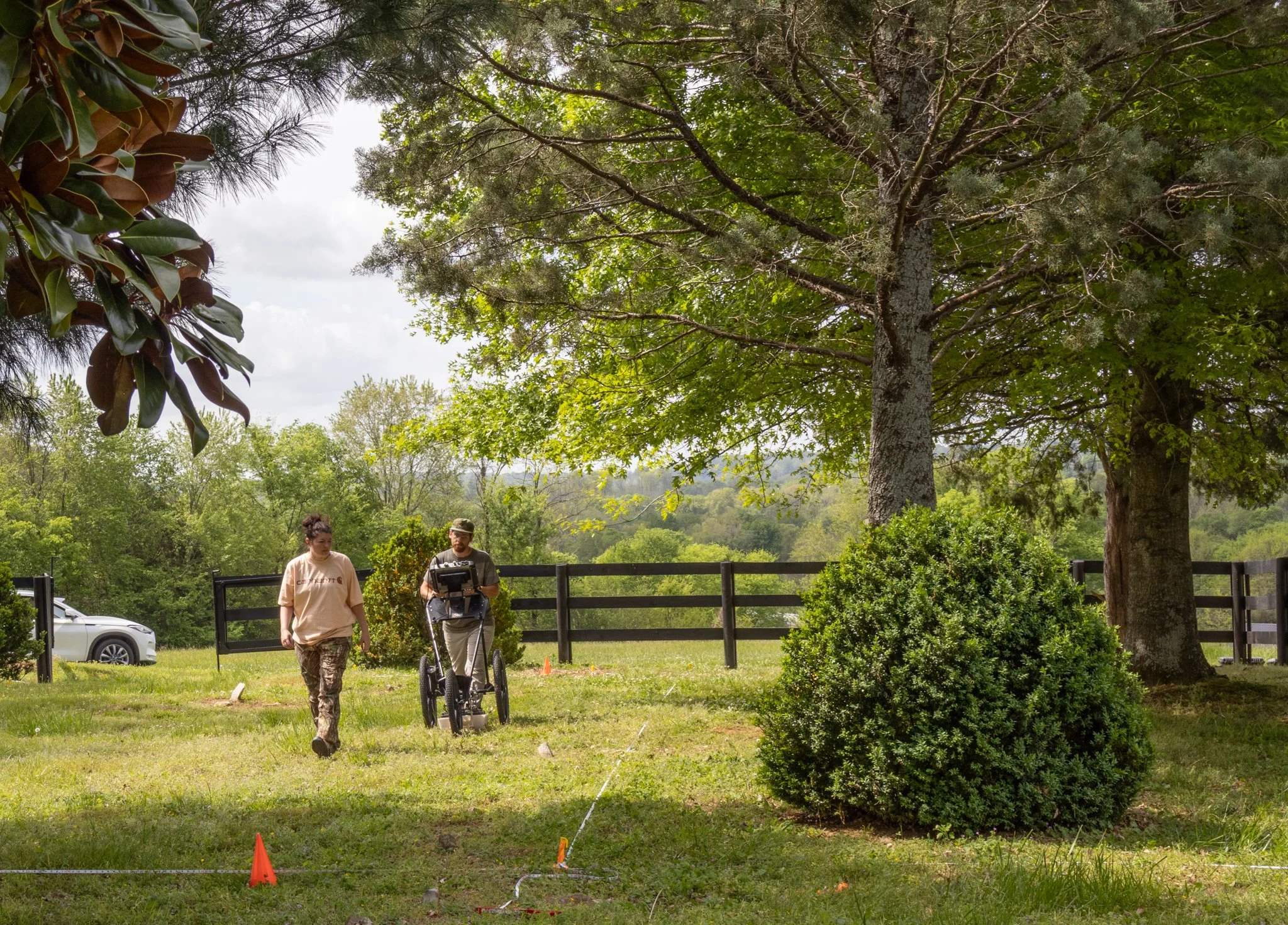
In April 2026, Allison (“Allie”) and Claiborne Sea of ArchaeoSpatial Analytics, Inc. conducted ground-penetrating radar (GPR) at the John Laird Cemetery with the goal to determine the presence of unmarked graves. GPR is a non-invasive, surface-level geophysical survey technique that uses electromagnetic energy in the form of radar waves. With an antenna that is placed on the ground, Allie and Claiborne walk back-and-forth over the land in clearly demarcated grid sections. As they walk, the antenna emits waves that are tuned to frequencies. These frequencies then penetrate the earth to detect buried structures, unmarked burials, refuse deposits, and the internal examination of Indigenous mounds.
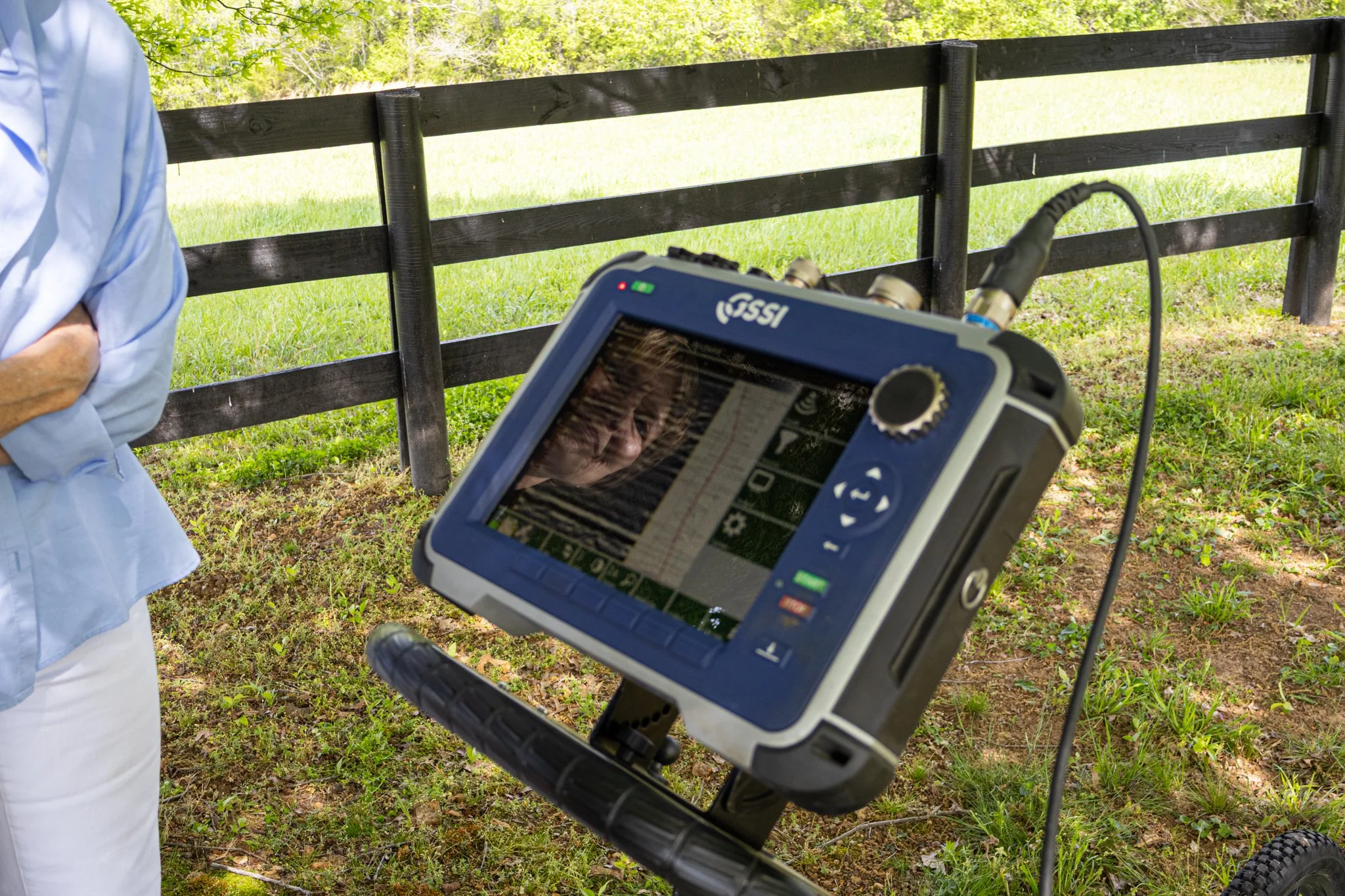
Allie and Claiborne divided the JLC into a grid of ten sections, and, using a GSSI SIR 4000 coupled with a GSSI 350 MHz HyperStacking digital antenna, systematically walked back-and-forth over the ground. While Alli and Claiborne emphasize that their findings are not absolute, they concluded that there are 194 potential unmarked burials in the John Laird Cemetery. Of those marked with headstones or fieldstones, the GPR detected 82 of 109, or 77%. While this is considered a high detection rate, it also makes it unlikely that all unmarked burials were detected.
Read ArchaeoSpatial Analytics’s full report below: